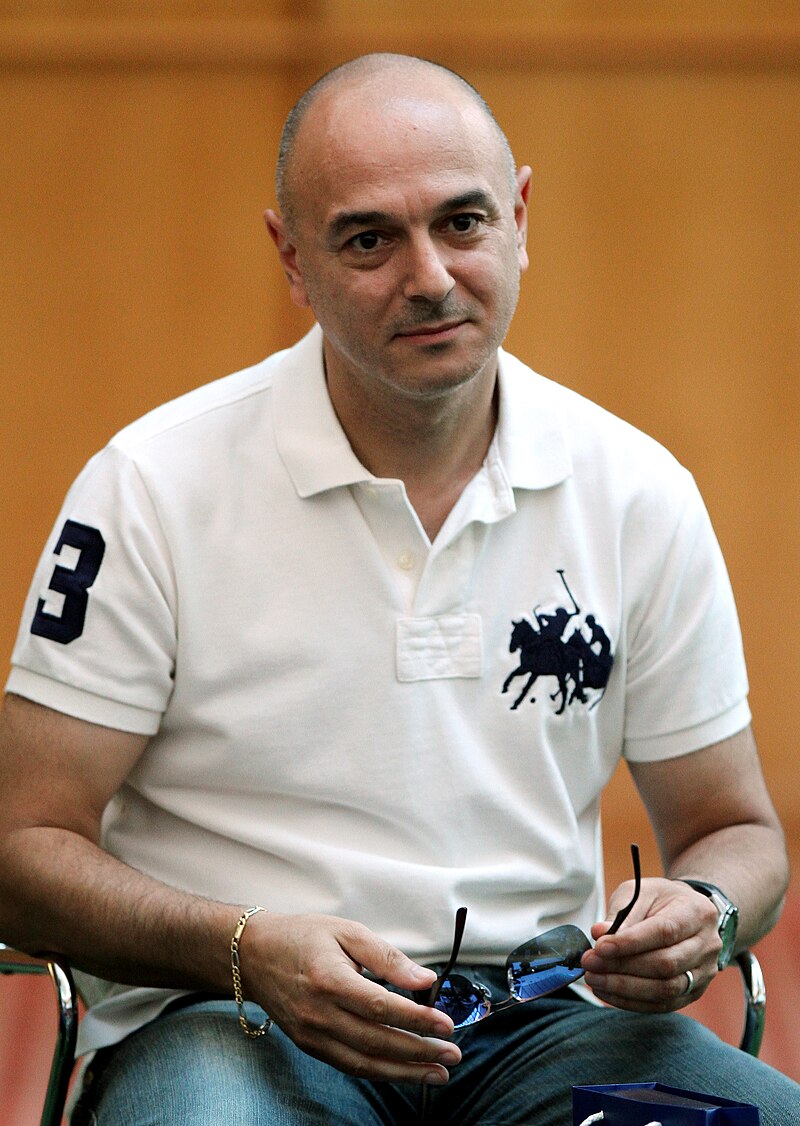
The Man Who Built an Empire Beyond the Pitch
Daniel Levy’s name is synonymous with two titans of modern commerce: real estate and football. As the chairman of Tottenham Hotspur, he has transformed a mid-table Premier League club into a global brand, while his parallel career as a billionaire property developer has cemented his status as one of Canada’s most influential business figures. The question isn’t just how he amassed his fortune—it’s how he reinvested it to reshape one of England’s most storied football clubs. His net worth as chairman of Tottenham is a testament to both financial acumen and a relentless vision for sports entertainment. But the numbers tell only part of the story. Behind the boardroom deals and stadium expansions lies a strategic mind that understands the intersection of luxury, fandom, and financial leverage better than most.
What makes Levy’s trajectory even more compelling is the contrast between his early life—a childhood in Montreal shaped by immigrant ambition—and his current role, where he wields influence over a club with a 150-year legacy. His journey from a young man navigating the cutthroat world of Canadian real estate to the helm of a Premier League giant is a masterclass in leveraging risk, timing, and cultural capital. The Daniel Levy chairman of Tottenham net worth isn’t just a figure; it’s a byproduct of decades of calculated moves, from high-stakes property acquisitions to the meticulous financial engineering behind Tottenham’s rise. Yet, for all his success, Levy remains a polarizing figure—admired for his ambition, scrutinized for his methods. The debate over whether his leadership has been a masterstroke or a gamble rages on, particularly as Tottenham’s financial model continues to evolve in an era of skyrocketing player wages and globalized sports media.
But here’s the paradox: Levy’s wealth and power are inseparable from Tottenham’s identity. The club isn’t just a vehicle for his financial portfolio—it’s a project, a statement, and a cultural phenomenon. His net worth as chairman of Tottenham is intertwined with the club’s valuation, its fanbase’s loyalty, and its ambition to compete with Manchester United and Liverpool. The numbers—whether it’s the £1.35 billion valuation of Tottenham Hotspur in 2023 or Levy’s estimated personal fortune—are just the beginning. The real story is in the why: Why did a real estate billionaire choose football? How does he balance the demands of a global sports brand with the pragmatism of a developer? And what does the future hold for a man who has already rewritten the rules of football ownership?
The Complete Overview
Historical Background and Evolution
Daniel Levy’s path to becoming chairman of Tottenham began in the 1980s, long before he ever stepped onto White Hart Lane. Born in Montreal to a Jewish family that fled the Soviet Union, Levy’s early years were marked by the hustle of immigrant entrepreneurship. His father, Gerald Levy, was a successful businessman who instilled in his son a ruthless work ethic and a knack for spotting undervalued assets. By his early 20s, Daniel Levy was already making waves in Canada’s real estate scene, acquiring and revitalizing properties with an eye for long-term appreciation.
His breakthrough came in the 1990s, when he co-founded Lansdowne Corporation, a real estate development firm that would later become a powerhouse in North America. Levy’s strategy was simple: identify distressed assets, secure financing through creative deals, and transform them into high-value commercial or residential spaces. His most iconic project was the Toronto Eaton Centre, which he acquired in 1999 for $425 million and later expanded into a global shopping and entertainment hub. By the time he sold a stake in Lansdowne for $1.5 billion in 2006, Levy had amassed a fortune that would allow him to pivot into football—a sport that, at the time, was still largely insulated from the corporate takeovers reshaping other industries.
The turning point came in 2001, when Levy and his business partner, Enzo Pérez, purchased a 20% stake in Tottenham Hotspur for £20 million. At the time, the club was mired in financial turmoil, with debts exceeding £20 million and a reputation as a "small club" in the Premier League. Levy’s initial investment was a gamble, but it was also a calculated move. He saw in Tottenham a brand with untapped potential—a club with a passionate fanbase, a historic stadium, and a geographic advantage in London’s burgeoning market. Over the next two decades, Levy would methodically transform the club’s financial health, its infrastructure, and its global appeal, all while maintaining a low public profile compared to his contemporaries like Roman Abramovich or the Glazer family.
By 2019, Levy had taken full control of Tottenham, buying out Pérez’s stake and becoming the sole owner. His net worth as chairman of Tottenham had ballooned, not just from his real estate empire but from the club’s own commercial success. The sale of the club’s training ground to a property developer for £50 million, the lucrative naming rights deal with AIA for the stadium, and the club’s burgeoning NFT and esports ventures all contributed to a financial model that was as innovative as it was aggressive. Today, Tottenham is valued at over £1.35 billion, making it one of the most valuable clubs in the Premier League—and Levy’s personal wealth reflects that growth.
Core Mechanisms: How It Works
Understanding Daniel Levy chairman of Tottenham’s net worth requires dissecting the dual engines of his financial empire: real estate leverage and sports monetization.
- Real Estate as the Foundation
Levy’s fortune was built on a simple but effective principle:
control land, control the future. His early career was defined by acquiring underperforming properties, securing long-term leases, and repurposing them for higher-value uses. For example, his work on the
Toronto Eaton Centre didn’t just involve retail—it involved creating an ecosystem of dining, entertainment, and corporate offices, ensuring recurring revenue streams. This philosophy translated seamlessly into football. When Levy took over Tottenham, he didn’t just invest in players; he invested in the
physical and commercial infrastructure of the club. The £1 billion stadium redevelopment (now known as
Tottenham Hotspur Stadium) wasn’t just a sports venue—it was a mixed-use development with offices, hotels, and retail spaces, designed to generate ancillary income long after the final whistle.
- Sports as a High-Growth Asset Class
By the 2010s, Levy recognized that football clubs had become
liquid assets, much like real estate. The key was to treat Tottenham not as a traditional sports team but as a
global entertainment brand. His strategies included:
-
Commercial Partnerships: Securing naming rights deals (e.g.,
AIA Tottenham Hotspur Stadium) and sponsorships that align with the club’s luxury positioning.
-
Digital Expansion: Investing in
Tottenham Hotspur’s esports team and
NFT initiatives to tap into younger, tech-savvy audiences.
-
Fan Engagement: Implementing membership models (like
Tottenham Hotspur Foundation’s community programs) to create direct revenue streams independent of matchday attendance.
-
Financial Engineering: Using
player trading profits (e.g., the £45 million sale of Christian Eriksen in 2017) to fund transfers and infrastructure, a tactic that kept the club competitive without relying solely on owner injections.
- The Levy Formula: Risk vs. Reward
What sets Levy apart is his ability to
balance risk and reward in a way few football owners have. Unlike Abramovich, who poured unlimited funds into Chelsea, or the Al-Khalifa family, who transformed Manchester City with Qatari oil money, Levy’s approach is
capital-efficient. He doesn’t chase trophies at all costs; instead, he builds a
self-sustaining financial ecosystem. For example, the sale of the training ground to a third party for £50 million in 2018 was a masterstroke—it injected cash without diluting ownership, and the new owners were responsible for ongoing maintenance. Similarly, his decision to
delay a Champions League final (to avoid clashes with the 2019 Wimbledon tournament) was controversial but commercially savvy, ensuring maximum TV revenue and fan engagement.
Key Benefits and Impact
"Football is not just a sport; it’s a business. And the most successful clubs are those that treat it like one."
— Daniel Levy (interview, 2021)
Major Advantages
Levy’s tenure as chairman has delivered tangible benefits for Tottenham, its fans, and its financial backers:
- Financial Stability Without Debt
Unlike many Premier League clubs burdened by debt (e.g., Manchester United’s £500 million loan from the Saudi-led consortium), Tottenham operates with
minimal leverage. Levy’s real estate background ensures the club’s finances are
asset-backed, reducing reliance on bank loans or external investors.
- Stadium as a Revenue Generator
The
Tottenham Hotspur Stadium isn’t just a venue—it’s a
24/7 commercial hub. With 90,000+ seats, it’s the largest club stadium in the UK, but its real value lies in its
non-matchday events (concerts, NFL games, corporate functions), which generate £50+ million annually.
Tottenham’s commercial revenue (sponsorships, merchandise, broadcasting) has grown
50% since 2016, partly due to Levy’s focus on
international markets. The club’s partnership with
Coca-Cola and
AIA brings in £60+ million yearly, with Levy ensuring contracts are structured to maximize long-term value.
- Player Marketplace Mastery
Levy’s squad-building philosophy—
buying high, selling higher—has made Tottenham a
profit machine. Transfers like
Harry Kane (£100m sale in 2023) and
Son Heung-min (£22m sale in 2023) injected £120+ million into the club’s coffers, funding new signings like
James Maddison and
Dejan Kulusevski.
- Fan Loyalty as a Competitive Edge
Unlike clubs that rely on short-term gimmicks (e.g., social media stunts), Levy has
deepened Tottenham’s cultural connection. Initiatives like the
Spurs Foundation and
community trust programs ensure fans see the club as an
investment in their identity, not just a business.
Comparative Analysis
| Metric | Daniel Levy (Tottenham) | Roman Abramovich (Chelsea) | Glazer Family (Man Utd) | Al-Khalifa Family (Man City) |
|---|
| Ownership Structure | Private (100% control) | State-backed (Russian oligarch) | Publicly traded (NYSE) | Qatari sovereign wealth |
| Net Worth Growth | +£1.2B (2010–2023) | ~£1.5B (pre-Ukraine) | Stagnant (since 2005) | +£2B (since 2008) |
| Debt Strategy | Minimal (asset-backed) | Heavy (£2.5B pre-2022) | Extreme (£500M+ loan) | Moderate (Qatar Investment) |
| Stadium Revenue | £100M+/year (mixed-use) | £80M (Stamford Bridge) | £60M (Old Trafford) | £90M (Etihad Campus) |
| Commercial Revenue | £200M+/year (global) | £180M (luxury positioning) | £150M (traditional) | £250M (Qatar-linked deals) |
: Levy’s model is
sustainable and scalable, unlike the debt-heavy approaches of Chelsea or Manchester United. His
net worth as chairman of Tottenham grows organically, tied to the club’s commercial success rather than external injections.
Future Trends
Levy’s next phase will likely focus on three pillars:
- Esports and Digital Dominance
Tottenham’s esports team (
Tottenham Hotspur FC eSports) is already a
£10M/year venture, but Levy is eyeing
metaverse partnerships and
gaming tournaments to tap into Gen Z audiences.
- Sustainability as a Brand Differentiator
With
Net Zero 2030 targets, Levy is positioning Tottenham as a
green club, from solar-powered stadiums to
eco-friendly merchandise, aligning with corporate sponsors’ ESG (Environmental, Social, Governance) goals.
- Expansion Beyond Football
Rumors persist of Levy exploring
NBA or NFL partnerships for the Tottenham Stadium, further diversifying revenue streams. A
major concert or sports event (e.g., Super Bowl) could add £50M+ annually.
Conclusion
Daniel Levy’s story is more than a tale of wealth accumulation—it’s a blueprint for modern sports ownership. His net worth as chairman of Tottenham is a direct result of treating football as a financial asset class, not just a passion project. While critics argue his methods lack the emotional resonance of traditional owners, the numbers don’t lie: Tottenham is profitable, debt-free, and globally relevant, all while competing at the highest level.
The question now is whether Levy can sustain this model in an era of AI-driven fan engagement, Saudi-led consortiums, and inflationary wages. His ability to adapt without losing Tottenham’s soul will define the next decade. One thing is certain: the Daniel Levy chairman of Tottenham net worth will keep rising—as long as he keeps redefining the rules of the game.
Comprehensive FAQs
Q: How much is Daniel Levy’s net worth as chairman of Tottenham?
A: While exact figures are private, estimates place Levy’s
net worth at £1.2–1.5 billion, with
£800M+ tied to Tottenham’s valuation (as of 2023). His real estate portfolio (including Lansdowne Corporation stakes) adds another £500M+. For comparison, Tottenham’s club value is
£1.35B, meaning Levy’s ownership stake alone could be worth
£1B+.
Q: Did Daniel Levy make money from selling Tottenham’s training ground?
A: Yes. In
2018, Levy sold the club’s training ground (Notting Hill) to a property developer for £50 million, a
1,200% return on his original £4M purchase in 2005. The deal was structured so Tottenham retained
long-term lease rights, ensuring ongoing revenue.
Q: How does Tottenham’s financial model compare to other Premier League clubs?
A: Tottenham operates on a
low-debt, high-commercial model, unlike:
-
Chelsea (Abramovich): Relied on owner funds (now restricted post-Ukraine war).
-
Man Utd (Glazers): Burdened by
£500M+ debt from the 2005 takeover.
-
Man City (Al-Khalifa): Funded by
Qatar Investment Authority, with less emphasis on organic growth.
Levy’s approach is
capital-efficient, prioritizing
sponsorships, stadium revenue, and player trading profits over debt.
Q: Has Daniel Levy ever taken a salary as Tottenham chairman?
A: No. Levy
does not take a salary from Tottenham, unlike many executives in football. His compensation comes from
dividends on his ownership stake and
real estate ventures. This aligns with his philosophy of
reinvesting profits into the club.
Q: What’s the biggest financial risk to Tottenham under Levy’s ownership?
A: The
dual pressures of wage inflation and Champions League parity. While Levy has avoided debt,
rising player wages (e.g., £300K/week for top stars) and
competition from Saudi-backed clubs (Newcastle, Roma) could force tough choices. His strategy—
selling high, buying smart—may need adjustment if the market shifts further.
Q: Could Daniel Levy sell Tottenham in the future?
A:
Unlikely in the short term, but not impossible. Levy has
no public exit plan, and Tottenham’s
financial health makes it an attractive asset. Potential buyers could include:
-
A sovereign wealth fund (e.g., Qatar, UAE).
-
A rival developer (e.g., Lendlease, Brookfield).
-
A global sports consortium (like the one behind Newcastle).
However, Levy’s
long-term vision suggests he’ll retain control, especially as Tottenham’s
commercial value continues to rise.
Q: How has Tottenham’s stadium deal with AIA impacted Levy’s net worth?
A: The
£100M/10-year naming rights deal with AIA (2019) was a
masterstroke:
-
Direct revenue: £10M/year for Tottenham.
-
Brand premium: AIA’s association with Spurs boosts its
Asian market valuation.
-
Stadium value: The deal
increased Tottenham’s commercial appeal, making the club more attractive for future sponsorships. Levy’s
net worth as chairman of Tottenham benefits indirectly, as the club’s
enterprise value rises.
Q: Is Daniel Levy involved in other sports businesses?
A: While Tottenham is his
primary focus, Levy has
indirect sports interests:
-
Lansdowne Corporation has explored
NASCAR and NFL venue deals in the U.S.
- He’s considered a
potential investor in a future Premier League franchise (e.g., London rival to Chelsea/Arsenal).
- His
real estate expertise makes him a
valuable advisor for stadium projects worldwide.